

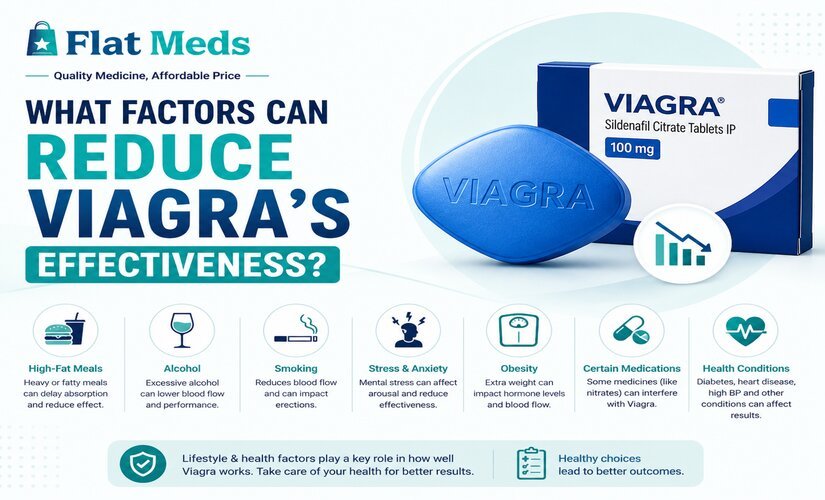
Viagra (sildenafil) is one of the most widely used prescription medications for treating erectile dysfunction (ED). While it works effectively for many men, several factors can reduce its performance or delay its effects. Understanding these factors can help improve treatment outcomes and ensure you get the maximum benefit from your medication.
Whether you’re taking Viagra for the first time or have noticed inconsistent results, this guide explains the most common reasons why Viagra may not work as expected and how to optimize its effectiveness safely.
Quick Overview
| Factor | Impact on Viagra | Recommendation |
|---|---|---|
| Heavy or High-Fat Meals | Delays absorption and onset | Take on an empty stomach or after a light meal |
| Excessive Alcohol | Reduces blood flow and erections | Limit alcohol intake before use |
| Incorrect Timing | Delays effectiveness | Take 30–60 minutes before sexual activity |
| Stress & Anxiety | Makes erections difficult | Reduce stress and improve relaxation |
| Medical Conditions | Can lower effectiveness | Manage underlying health conditions |
Common Factors That Reduce Viagra’s Effectiveness
1. Eating a Heavy or High-Fat Meal
One of the most common reasons Viagra doesn’t work as expected is taking it after a large, fatty meal. The same applies to Fildena 100, as both medications contain sildenafil citrate. High-fat foods slow stomach emptying, delaying the absorption of sildenafil into the bloodstream and potentially reducing its effectiveness.
Examples include:
- Fried foods
- Burgers
- Pizza
- Cream-based dishes
- Fast food meals
Best Practice
Take Viagra on an empty stomach or after a light meal for faster results.
2. Drinking Too Much Alcohol
Alcohol can significantly reduce Viagra’s effectiveness.
Excessive drinking:
- Lowers blood pressure
- Reduces sexual stimulation
- Makes it harder to maintain an erection
- Increases dizziness
Moderate alcohol may not completely prevent Viagra from working, but heavy drinking often decreases its success.
3. Incorrect Dosage
Taking the wrong dosage may reduce effectiveness.
Common prescribed doses include:
Only your healthcare provider should determine the correct dose.
Never increase your dose without medical advice.
4. Taking Viagra at the Wrong Time
Viagra usually starts working within 30–60 minutes.
Taking it too early or too late may reduce its effectiveness.
For best results:
- Take 30–60 minutes before sexual activity
- Allow adequate time for absorption
- Avoid rushing the process
5. Lack of Sexual Stimulation
Viagra is not an aphrodisiac.
It enhances blood flow but requires sexual arousal to produce an erection.
Without stimulation, Viagra may appear ineffective.
6. Stress, Anxiety, or Performance Anxiety
Mental health plays a significant role in erectile function.
Psychological factors include:
- Stress
- Anxiety
- Depression
- Relationship issues
- Performance anxiety
Reducing stress often improves treatment success.
7. Certain Medications
Some medications can interfere with Viagra, including:
| Medication Type | Possible Effect | Examples |
|---|---|---|
| Nitrates | Dangerous blood pressure drop | Nitroglycerin |
| Alpha-blockers | Increased dizziness | Tamsulosin |
| Certain Antibiotics | Increase sildenafil levels | Erythromycin |
| Antifungal Drugs | Alter metabolism | Ketoconazole |
| HIV Medications | Affect drug breakdown | Ritonavir |
Always tell your healthcare provider about every medication you take.
8. Smoking
Smoking damages blood vessels and restricts circulation.
Poor blood flow makes erections more difficult, even with Viagra.
Quitting smoking can improve erectile function over time.
9. Underlying Health Conditions
Several medical conditions may reduce Viagra’s effectiveness.
These include:
- Diabetes
- High blood pressure
- Heart disease
- Obesity
- High cholesterol
- Kidney disease
- Liver disease
- Hormonal imbalances
Treating these conditions often improves ED treatment outcomes.
Explore Popular Sildenafil Treatment Options
If Viagra isn’t delivering the expected results, your healthcare provider may recommend another sildenafil-based medication or adjust your treatment plan. Below are some commonly prescribed Erectile Dysfunction medications that may be considered based on your individual needs.
Explore Popular Sildenafil Treatment Options
| Medicine | Starting Price | Order |
|---|---|---|
| Super Fildena | From $0.90/Tablet | 🛒 Order |
| Fildena 150 | From $0.80/Tablet | 🛒 Order |
| Fildena 50 | From $0.60/Tablet | 🛒 Order |
10. Counterfeit Viagra
Fake medications may contain:
- Incorrect ingredients
- Wrong dosage
- Harmful contaminants
Only purchase Viagra from licensed pharmacies or healthcare providers.
Tips to Make Viagra Work Better
| Tip | Why It Helps | Best Practice |
|---|---|---|
| Take on an empty stomach | Faster absorption | Avoid fatty meals |
| Follow the prescribed dosage | Better safety and effectiveness | Never self-adjust |
| Limit alcohol | Improves blood flow | Drink moderately |
| Stay sexually stimulated | Required for Viagra to work | Engage in foreplay |
| Maintain a healthy lifestyle | Supports circulation | Exercise, eat well, and sleep enough |
Symptoms That Viagra May Not Be Working Properly
You should consult your healthcare provider if:
- Viagra never works
- It suddenly stops working
- Erections remain weak
- Side effects become severe
- You experience chest pain or vision changes
FAQs
1. Why isn’t Viagra working for me?
Heavy meals, alcohol, stress, incorrect timing, or underlying medical conditions may reduce its effectiveness.
2. Does food reduce Viagra’s effectiveness?
Yes. High-fat meals can delay absorption and slow its effects.
3. Can alcohol make Viagra less effective?
Yes. Excessive alcohol may reduce blood flow and make erections harder to achieve.
4. Should I take Viagra on an empty stomach?
Yes. Taking it on an empty stomach usually provides faster and more consistent results.
5. How long before sex should I take Viagra?
Most men should take Viagra 30–60 minutes before sexual activity.
6. Can stress stop Viagra from working?
Yes. Anxiety and stress can interfere with sexual arousal and erection quality.
7. Does smoking affect Viagra?
Yes. Smoking damages blood vessels, reducing blood flow needed for erections.
8. Which medications interact with Viagra?
Nitrates, alpha-blockers, some antibiotics, antifungals, and HIV medications can interact with Viagra.
9. Can health conditions reduce Viagra’s effectiveness?
Yes. Diabetes, heart disease, obesity, and high blood pressure can all affect results.
10. How can I improve Viagra’s effectiveness?
Take it correctly, avoid heavy meals and excessive alcohol, manage stress, stay healthy, and follow your healthcare provider’s instructions.
Conclusion
Viagra is highly effective for many men, but its success depends on proper timing, dosage, lifestyle habits, and overall health. Heavy meals, excessive alcohol, smoking, stress, certain medications, and chronic health conditions can all reduce its effectiveness.
By taking Viagra as prescribed, maintaining a healthy lifestyle, and addressing any underlying medical issues, you can improve your chances of achieving the best possible results. If Viagra consistently fails to work, consult your healthcare provider to identify the cause and discuss alternative erectile dysfunction treatment options.