

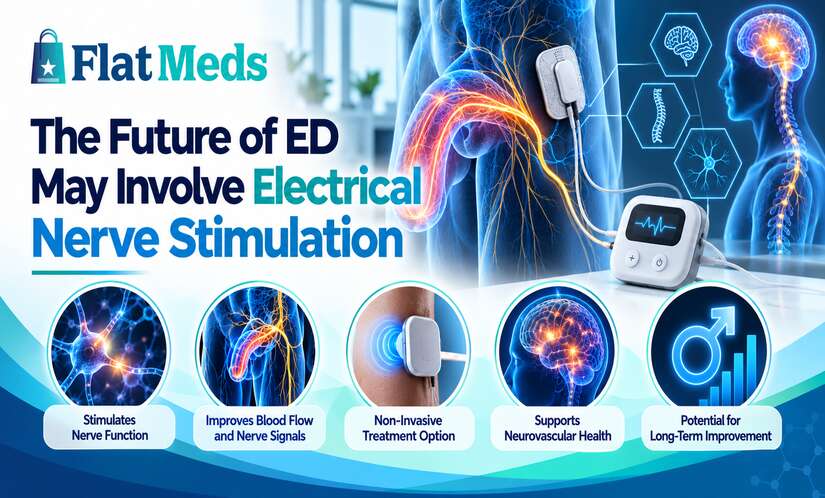
What if the future of erectile dysfunction treatment involved more than pills? Imagine a technology designed to stimulate specific nerves and potentially support the biological processes involved in achieving an erection. Although this approach is still being studied, electrical nerve stimulation for erectile dysfunction is attracting scientific interest as researchers explore new ways to improve men’s sexual health.
Erectile dysfunction (ED) affects a man’s ability to achieve or maintain an erection sufficient for sexual activity. Common treatments include medications, lifestyle changes, psychological counseling, and medical devices. However, not every patient responds equally well to existing options.
This has encouraged researchers to investigate emerging approaches, including peripheral electrical stimulation and neuromodulation. Could these technologies change the future of Erectile Dysfunction treatment? Early findings are interesting, but more high-quality research is needed before electrical stimulation can be considered a routine treatment.
What Is Electrical Nerve Stimulation for Erectile Dysfunction?
- Electrical nerve stimulation involves using controlled electrical impulses to activate particular nerves or neural pathways. Researchers are investigating whether peripheral electrical stimulation (pES) could help improve erectile function by influencing nerve signaling and other physiological processes.
- An erection depends on coordinated communication between the brain, nervous system, blood vessels, and erectile tissue. When sexual stimulation occurs, nerve signals help initiate changes that increase blood flow into the penis.
- Problems involving nerves, circulation, diabetes, or other medical conditions can interfere with this process. Researchers are therefore exploring whether electrical stimulation might support certain pathways involved in erectile function.
- However, electrical stimulation is not one single treatment. Different techniques use different stimulation sites, protocols, and equipment. Their effectiveness for erectile dysfunction may also differ.
How Could Electrical Stimulation Improve Erectile Function?
The potential benefits of electrical stimulation for Erectile Dysfunction are based on several possible mechanisms.
1. Supporting Nerve Signaling
The nerves involved in erection help coordinate the physiological responses needed for increased penile blood flow. Researchers are studying whether peripheral electrical stimulation can influence relevant neural pathways.
This possibility is particularly interesting for patients whose erectile difficulties involve neurological dysfunction. Nevertheless, the precise mechanisms and the patients most likely to benefit remain uncertain.
2. Influencing Blood Flow and Erectile Function
An erection requires healthy blood vessel function and sufficient blood flow into erectile tissue. Researchers are examining whether electrical stimulation may influence processes associated with vascular function and erectile response.
These are proposed mechanisms rather than established explanations for clinical improvement. More research is needed to determine which biological changes occur and whether they produce meaningful, lasting benefits.
3. Supporting Pelvic Floor Rehabilitation
Pelvic floor muscles contribute to aspects of sexual function. Pelvic floor muscle training may help selected men with erectile dysfunction, and researchers have investigated whether electrical stimulation combined with exercise or biofeedback could provide additional benefits.
However, pelvic floor electrical stimulation and peripheral nerve stimulation are not identical techniques. Their uses and supporting evidence should be assessed separately.
What Does Current Research Say About Electrical Stimulation for ED?
Research into electrical stimulation for erectile dysfunction is promising but still limited.
- A 2025 systematic review published in the International Journal of Impotence Research examined three randomized controlled trials involving 82 men with Erectile Dysfunction. The studies investigated transcutaneous electrical stimulation in different settings, including comparisons with placebo, aerobic exercise, and pelvic floor muscle training with biofeedback.
- The review found possible improvements in erectile function, but the researchers rated the certainty of the evidence as very low because of small sample sizes, potential bias, and differences between the studies. They concluded that the available evidence was inconclusive.
- A separate 2025 systematic review and meta-analysis also reported encouraging results for peripheral electrical stimulation. However, it included only three randomized trials with 82 participants and identified substantial differences between the studies. The authors emphasized that further research is needed before routine use can be supported.
Key Research Findings
| Research area | Current findings | Main limitation |
|---|---|---|
| Peripheral electrical stimulation | Potential improvement in erectile function | Few clinical trials |
| Pelvic floor stimulation | Possible additional benefit with rehabilitation | Small study populations |
| Long-term effectiveness | Not yet established | Limited follow-up evidence |
| Routine clinical use | Further evaluation needed | Low certainty of evidence |
These findings support continued investigation, not claims that electrical stimulation is a proven cure for ED.
Electrical Stimulation vs. Traditional Impotence Treatments
Electrical stimulation differs from established erectile dysfunction treatments in how it is intended to work.
| Treatment | Main approach | Current role |
|---|---|---|
| Sildenafil and tadalafil | Support erection-related blood flow | Established medication options |
| Lifestyle changes | Improve overall cardiovascular and metabolic health | Important part of Erectile Dysfunction management |
| Psychological counseling | Address anxiety, stress, and related factors | Useful when psychological contributors are present |
| Electrical nerve stimulation | Investigates possible effects on neural and physiological pathways | Emerging research approach |
For many men, established treatments remain the appropriate starting point. A healthcare professional can assess underlying causes and recommend suitable options based on medical history, symptoms, and treatment preferences.
Electrical stimulation should not be presented as a proven replacement for sildenafil, tadalafil, or other established therapies.
Is Electrical Stimulation Safe for Erectile Dysfunction?
Safety depends on the type of stimulation, the equipment used, the treatment site, and the patient’s medical circumstances.
Some small clinical trials have reported no adverse effects, but small studies cannot establish safety for all patients or detect uncommon complications reliably. Larger, well-designed trials are needed to assess tolerability, optimal protocols, and longer-term outcomes.
Men should avoid experimenting with electrical devices intended for other purposes or applying electrical stimulation to sensitive areas without appropriate medical guidance.
Anyone considering an emerging Erectile Dysfunction treatment should discuss its evidence, potential risks, and alternatives with a qualified healthcare professional.
Could Neuromodulation Change the Future of Impotence Treatment?
Neuromodulation refers to techniques that influence nerve activity. It is being explored across several areas of medicine, and researchers are investigating whether selected approaches could eventually have a role in erectile dysfunction management.
The future of electrical stimulation for Erectile Dysfunction will depend on answering several important questions:
- Which patients are most likely to benefit?
- Which nerves or stimulation sites should be targeted?
- What stimulation intensity and treatment schedule are appropriate?
- Can benefits last beyond the treatment period?
- How does electrical stimulation compare with established therapies?
- Can it safely complement other treatments?
Future clinical trials will need larger participant groups, standardized treatment protocols, longer follow-up periods, and reliable measures of erectile function and quality of life.
If future research demonstrates consistent benefits, electrical stimulation may eventually become an option for selected patients. Until then, it is best understood as an investigational direction rather than an established treatment.
Frequently Asked Questions
1. What is electrical nerve stimulation for erectile dysfunction?
It is an emerging approach that uses electrical impulses to stimulate nerves or related pathways being studied for their possible role in erectile function.
2. Can electrical stimulation help men with Erectile Dysfunction?
Early research suggests potential benefits, but current evidence is limited and does not establish routine effectiveness.
3. How does electrical stimulation work for Erectile Dysfunction?
Researchers are investigating whether it can influence nerve signaling and physiological processes involved in erection.
4. Is electrical stimulation an established Impotence or PE treatment?
No, it is not currently supported as a routine treatment by the limited clinical evidence available.
5. What does research say about electrical stimulation for Erectile Dysfunction?
Small clinical trials have reported encouraging findings, but systematic reviews have highlighted low-certainty evidence and the need for further research.
6. Can pelvic floor electrical stimulation improve erections?
It may help in selected settings, but its additional benefits and appropriate uses require further study.
7. Is TENS the same as neuromodulation for Impotence?
No, TENS is a specific electrical stimulation technique, while neuromodulation is a broader term covering methods that influence nerve activity.
8. Can electrical stimulation replace sildenafil or tadalafil?
There is insufficient evidence to recommend electrical stimulation as a replacement for established ED medications.
9. Is electrical stimulation safe for erectile dysfunction?
Its safety profile for Erectile Dysfunction requires further evaluation, so patients should seek professional guidance before considering it.
10. Could nerve stimulation change the future of ED treatment?
Potentially, but its future role depends on larger clinical trials demonstrating reliable benefits and acceptable safety.
Conclusion
The future of erectile dysfunction treatment may involve technologies that go beyond conventional medication. Electrical nerve stimulation is one research direction attracting attention because of its potential to influence neural and physiological processes associated with erections.
Early clinical studies offer reasons for further investigation, but the evidence remains limited. Researchers still need to establish which patients might benefit, how treatment should be delivered, and whether improvements are safe and sustainable over time.
For now, electrical nerve stimulation for erectile dysfunction remains an emerging research approach, not a proven replacement for established treatments. Men experiencing persistent ED should seek medical evaluation to identify possible causes and discuss evidence-based treatment options.
As research develops, better clinical evidence will determine whether electrical stimulation becomes a meaningful part of personalized erectile dysfunction care.
Medical disclaimer: This article is for educational purposes only and does not replace professional medical advice, diagnosis, or treatment.
References
- Bonete et al. (2025). The effectiveness of electrical stimulation in the treatment of erectile dysfunction: A systematic review of randomized controlled trials. International Journal of Impotence Research.
- Navas Mosqueda et al. (2025). Electrical stimulation for erectile dysfunction: A systematic review and meta-analysis of randomized controlled trials.
- European Association of Urology: Sexual and Reproductive Health Guidelines